Blog_post_jaegun_kai_phung
A New Window to the Stars: Why Jaegun Yoo Wants You to “Look Up”:
Kai Phung
University of Arizona
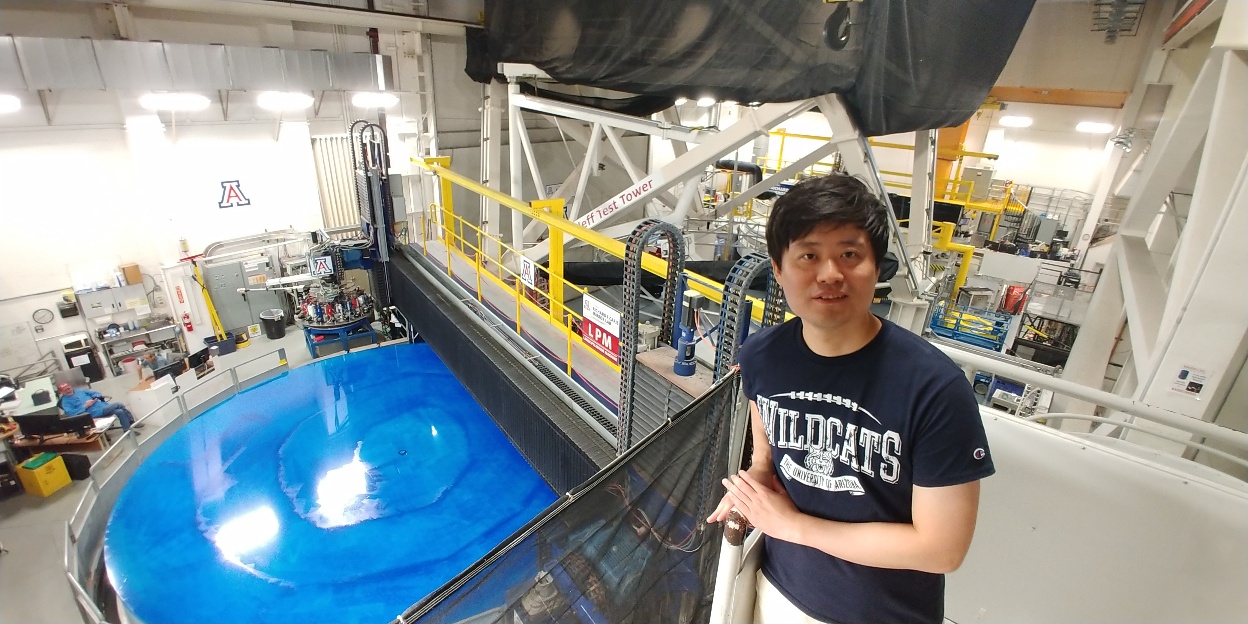
Sometimes the path to the stars begins on the living room floor. For Jaegun Yoo, the journey to becoming a space scientist started not with a telescope, but with a screwdriver and a pile of broken toys. As a child, he didn’t just play with his things; he took them apart to see how they worked— a curiosity that eventually led him into a career in mechanical engineering. Now, his path has brought him back to his childhood wonder, but on a much grander scale. At the University of Arizona’s Steward Observatory, Jaegun is the “master of temperature” for the UASAL team. Using the same persistence he developed while trying to beat the “final boss” in video games, he is now tackling the ultimate challenge: ensuring a multimillion-dollar telescope can survive the brutal, unforgiving temperatures of deep space.
1. What is your role on UASAL and why is it important to the team?
My role at the University of Arizona Space Astrophysics Lab (UASAL) is to design the temperature control system that keeps the space telescope and its instruments within the right operating temperature range in space. Space is really different from what we’re used to on Earth, and there is no air and no convection, so heat doesn’t move around the same way. Also, space is an extreme environment. Deep space is close to -459.67 °F (almost as cold as you can get), but surfaces facing the sun can heat up to around 300°F, depending on the space telescope’s design and orbit. Different instruments on the telescope require different operating temperatures, and they are all connected. Hence, heating or cooling one part can affect another.
To make sure an astronomical space instrument works safely and performs well, we do three main steps. First, we run on-orbit simulations to predict how hot or cold the space telescope will get in orbit. Next, based on those results, we design and build thermal control hardware – things like heaters, insulation, and radiators. Finally, we test and validate the system in a thermal vacuum chamber, which recreates (replicates) space conditions to verify that our design works.
This role is important because if the telescope gets too hot or too cold, the instruments can stop working or the image quality can degrade. In other words, my role helps instruments survive in space and produce good scientific data.
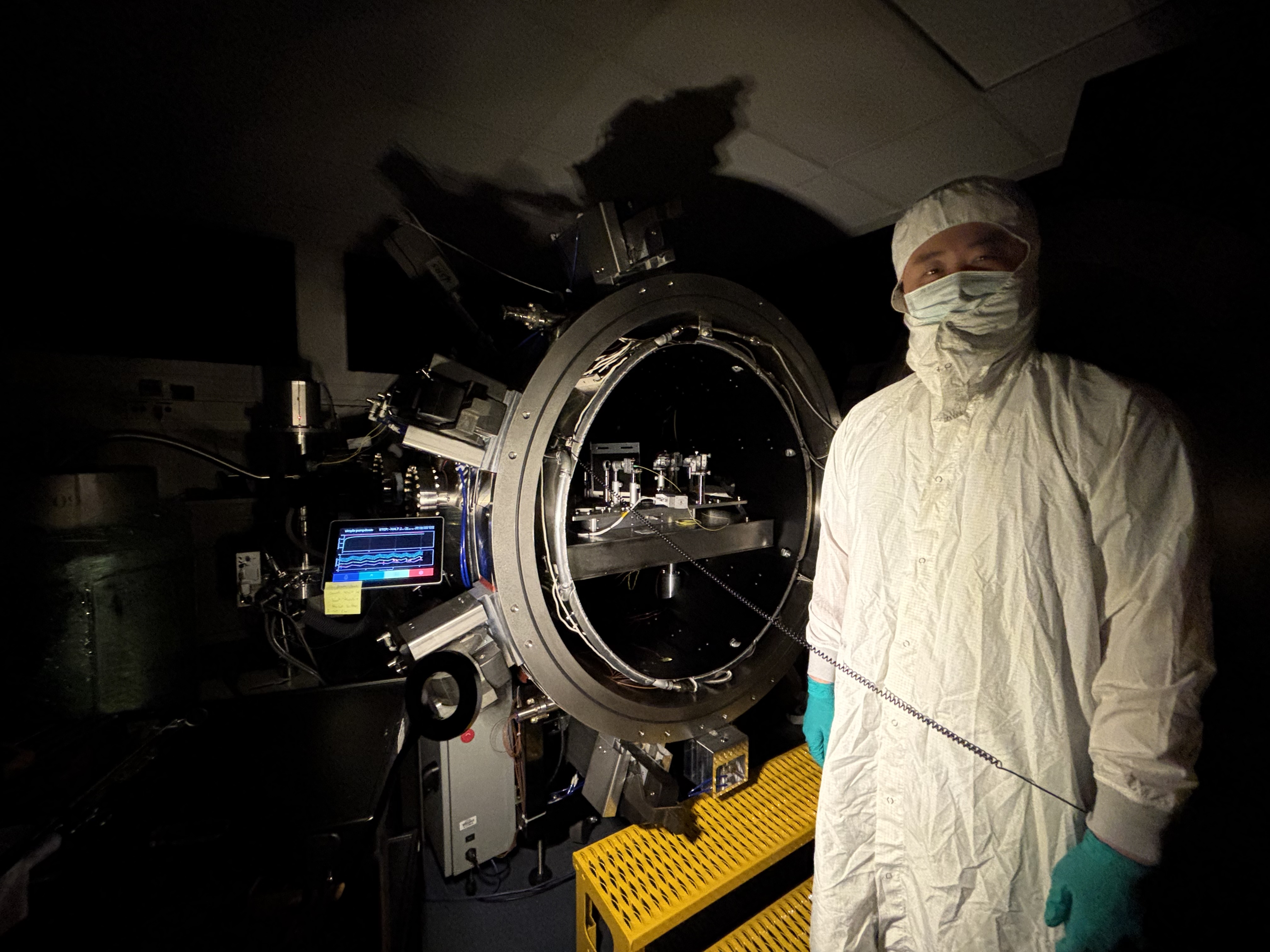
Jaegun Yoo in the UA Steward Observatory Cleanroom
2. What previous experiences have prepared you for working at Steward Observatory on Space Missions?
I believe there are three things that have prepared me for working on the UASAL team. First, my initial major was not astronomy and space science. I majored in Mechanical Engineering before I started studying Astronomy and Space Science. I worked in the mechanical and aerospace industries for many years, and I participated in small CubeSAT (miniature satellites) projects. I believe my previous experience has prepared me well for working on the UASAL team.
Second, when I was a kid I loved toys, but I didn’t just play with them. I often took them apart piece by piece because I was curious about how they were built and how they worked. Even though my parents sometimes had to buy new toys because of me, I think that curiosity is still with me today. It helps a lot when I’m trying to understand a complex spacecraft system.
Third, I’ve always enjoyed video games. When I start a game, I usually keep going until I beat the final boss and see the ending. That habit trained me to be persistent to keep trying even when something is hard. In spacecraft development, problems aren’t always solved quickly, so that “stick with it” mindset is very useful, and it also helps me support my team when things get challenging.
3. Why should everyone care about this project?
As I mentioned earlier, space exploration takes a huge amount of time, people, and funding. This is one of the biggest and most complex projects humans can build. The technologies we develop for space don’t just stay in space.
It’s not just astronomers—everyone is benefiting from space development. Over time, many of the space technologies end up helping people here on Earth in everyday life. Some good examples are memory foam and scratch-resistant lenses. These came from space development! So, as low-cost astronomical space instrumentation is successfully launched and deployed, I believe many people outside this community could benefit as well. In addition, low-cost astronomical space instrumentation could help the public have more chances to experience and connect with space more easily.
4. What is the big picture of space exploration?
How much do we really know about the universe? A lot of astronomers say we’ve only figured out a tiny fraction—maybe not even 1%. I think we humans often trust only what we can see, and we forget what we can’t see. Every day, we receive sunlight that existed long before we were even born—and we get it for free. Earth’s magnetic field blocks a lot of harmful particles from reaching us. If the distance between the Earth and the Sun was a little closer or farther away, Earth might have turned into a Venus or Mars where humans couldn’t live the way we do.
And here we are, living our everyday lives: we laugh, we cry, we argue/fight with friends, we compete, and honestly, we work really hard just to get through each day. So sometimes, I want to encourage people—especially students—not to only focus on what’s right in front of them on the ground. Look up. Take a breath. Give yourself a moment to step back and reflect on who you are and what really matters. For me personally, when I look at the universe that God created, it helps me reflect on myself. It reminds me to stay humble—and to live with gratitude to God.